What is Engine Management?

Electronic Fuel Injection (EFI) has been with us since the 80’s, and ushered in a new era for the automotive world. Rather than mechanically metering air and injecting fuel, EFI uses a computer, known as the Engine Control Unit (ECU) to measure the air electronically, and calculates how long to hold injectors open to get just the right amount of fuel in the engine.
The ECU controls almost every aspect of engine operation, processing data from a range of sensors around the engine, and operating outputs like injectors, ignition coils, fuel pumps, various solenoids and relays.
ECU’s unlocked a level of precision and adaptability not seen before them, allowing engines to run precisely and efficiently across a wide range of conditions.
So why upgrade your factory ECU?
Factory ECUs are designed to meet various targets like emissions, fuel economy, and reliability over a wide range of operating conditions ranging from Siberian winters to Arizona summers, from sea level to alpine passes. Performance or flexibility with modifications though aren’t a high priority for the Original Equipment Manufacturers (OEMs).
Most factory ECUs also have hard limits that are difficult or impossible to work around. On older vehicles, tuning often required physically modifying the ECU hardware with flashable chips. On newer cars, flash tuning is possible, but the scope is narrow: there's no live adjustment, and adding new sensors or functionality typically isn't an option.

Factory ECUs must be compliant under all climate extremes
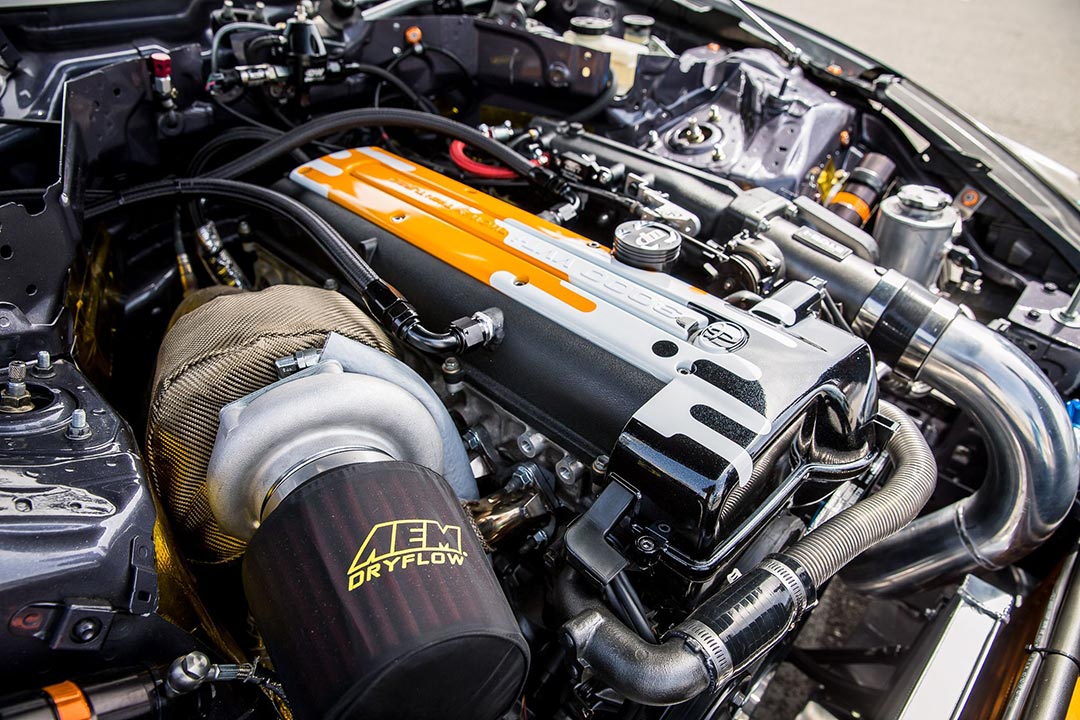
An aftermarket ECU removes the constrains a factory ECU may place on your dream build
As you move further from factory power levels, these constraints become more significant. A factory ECU may not be able to monitor critical parameters like oil pressure at all, leaving the engine unprotected in situations where protection matters most.
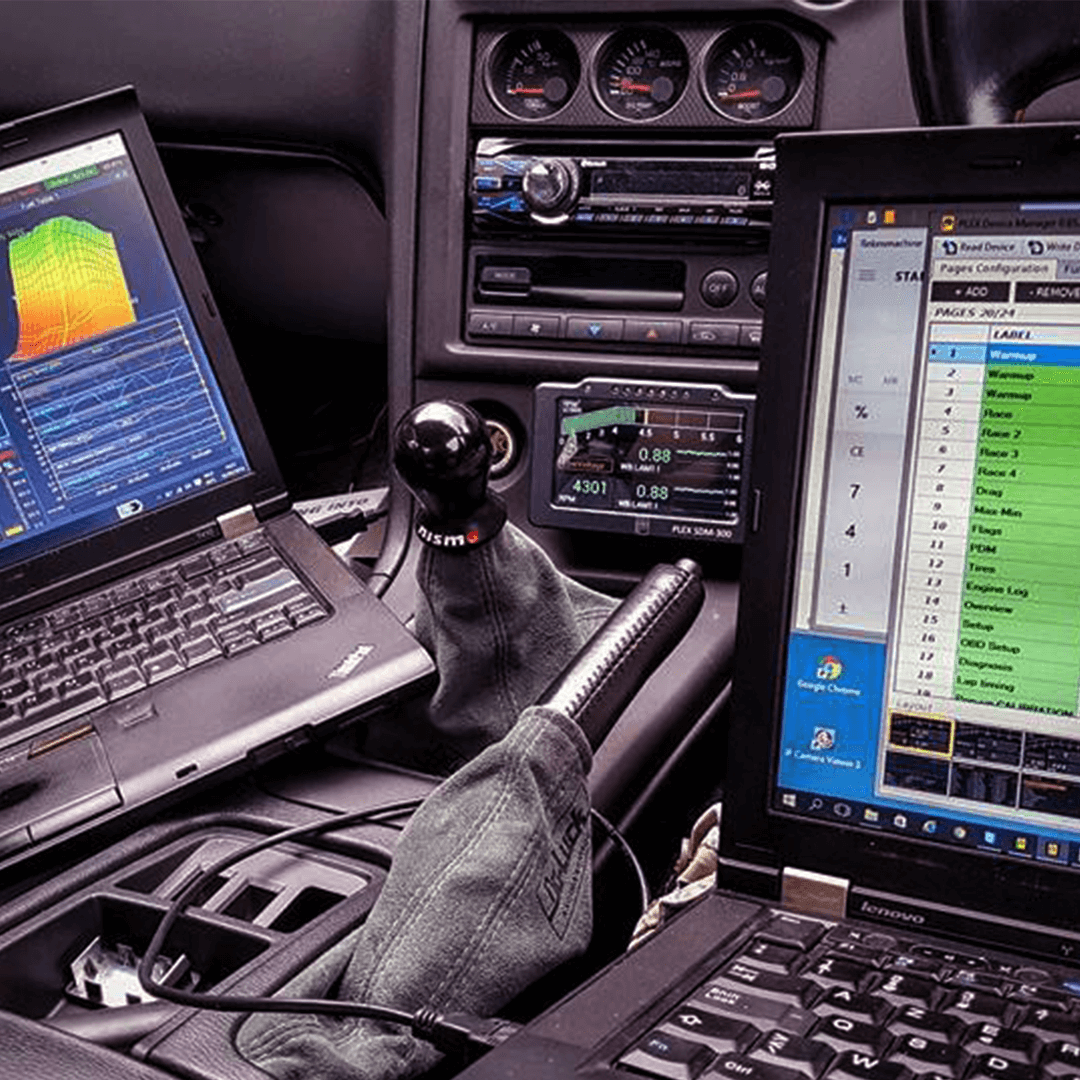
A Link ECU removes those limitations. You choose which sensors and components to run, you can do live tuning, and configure inputs for advanced safety strategies. Features like custom boost control, launch control, and nitrous control all become possible, as well as using accessories like CAN keypads, or digital dashboards.
Even on a standard engine, upgrading to a Link ECU can improve reliability, allowing you to run extra sensors and implement safety strategies on vehicles that were never equipped with them from the factory. And on older vehicles, you can modernise the sensors, injectors, and coils, freeing you from having to rely on parts that are no longer available new.
Types of replacement ECUs
There are two main types of aftermarket ECU: Plug-In and Wire-In. The right choice depends on what you're building and how much wiring you want to change. Plug-Ins are designed to plug into a vehicles factory wiring as the name suggests, where as Wire-In’s come with a universal wiring headers, and are intended to be custom wired in.
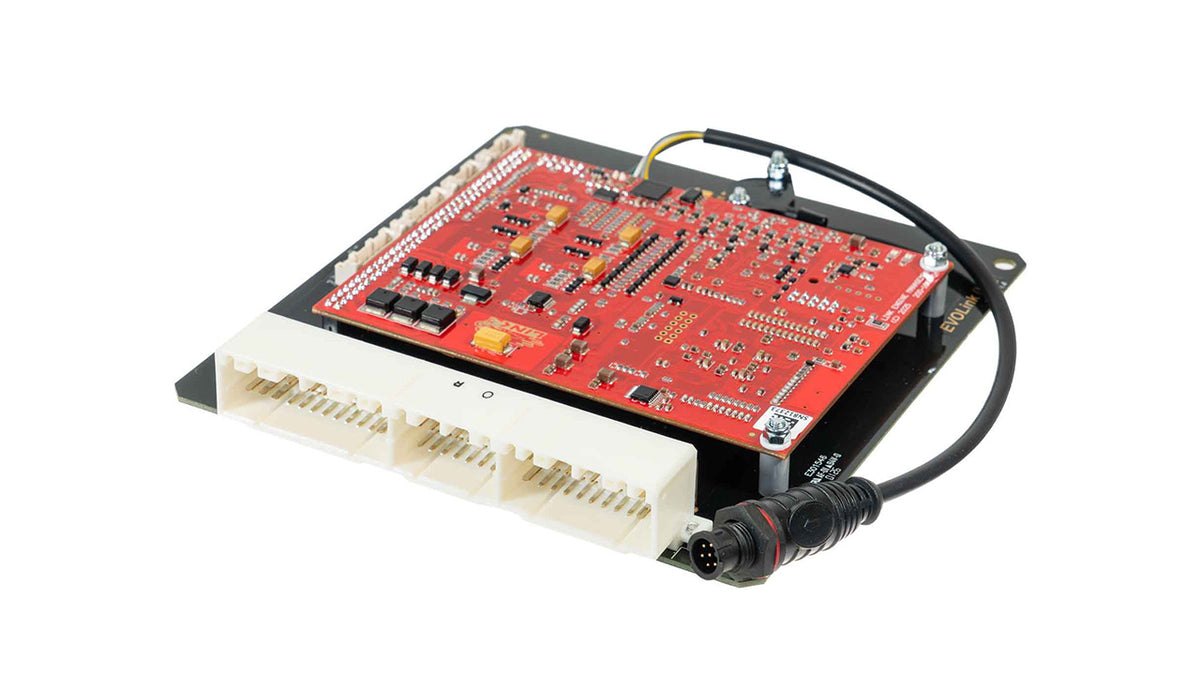
Plug-in ECUs
Link offers the widest range of Plug-In ECUs on the market, each designed to directly replace the factory ECU using the original wiring loom and connectors. Installation is straightforward, with minimal modification required to get up and running. Most Plug-In ECUs also include expansion connectors, so you can add sensors and outputs as your build develops. They're a strong option when you want full tuning flexibility and access to advanced features while keeping a clean, factory style install.
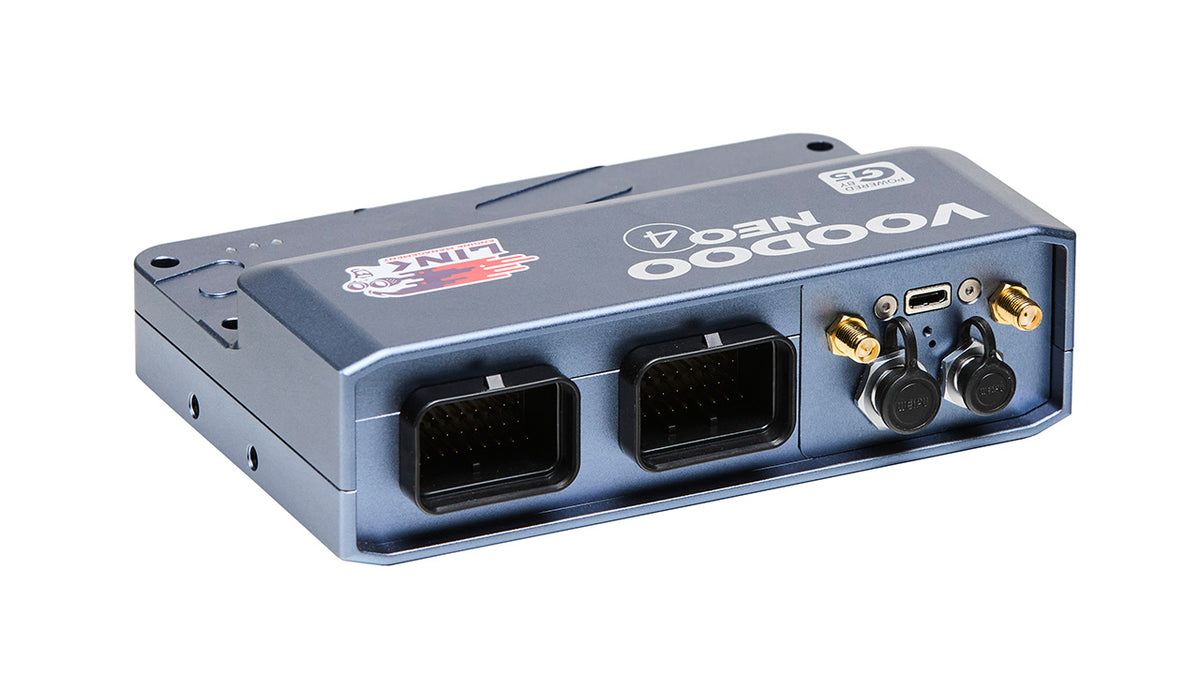
Wire-in ECUs
Wire-In ECUs offer the highest level of flexibility and are best suited to heavily modified vehicles, engine swaps, and purpose-built race cars. Rather than plugging into a factory loom, they're wired in directly, either integrated into a modified factory harness or built into a custom loom from scratch.
Wire-In ECUs also span a wide range of features and price points. If you need basic control for a simple engine, an entry-level ECU like the Atom keeps costs down without sacrificing the core functionality. At the other end of the scale, higher spec ECUs support advanced setups including direct injection, staged port and direct injection, automatic transmission control, and a full suite of motorsport features.
How an ECU Works: Inputs, Processing, Outputs
At its core, an ECU is constantly making decisions based on what’s happening in the engine at that exact point. It does this by receiving data from sensors, processing that information, and then adjusting how the engine runs on the fly. This cycle is happening hundreds of times per second, keeping everything running smoothly under all conditions.
Inputs: Sensing What the Engine Is Doing
Sensors are how the ECU knows what the engine is doing. They provide the critical information needed to understand engine speed, engine load, temperature, position and so on.
The most critical are the trigger, or crank and cam position sensors. These tell the ECU exactly where the engine is in its cycle, which is what allows it to fire injectors and ignition coils at the right moment. This precise timing and level of control is what sets EFI apart from what came before it.
Other sensors measure how much air the engine is consuming, detect knock, and keep tabs on fluid temperatures and pressures, and can measure the results of the combustion through things like 02 sensors or exhaust gast temperature sensors and so on.
For a more in depth look at what sensors you might find, and their function on a typical aftermarket setup, check out our tech articles on the support website.
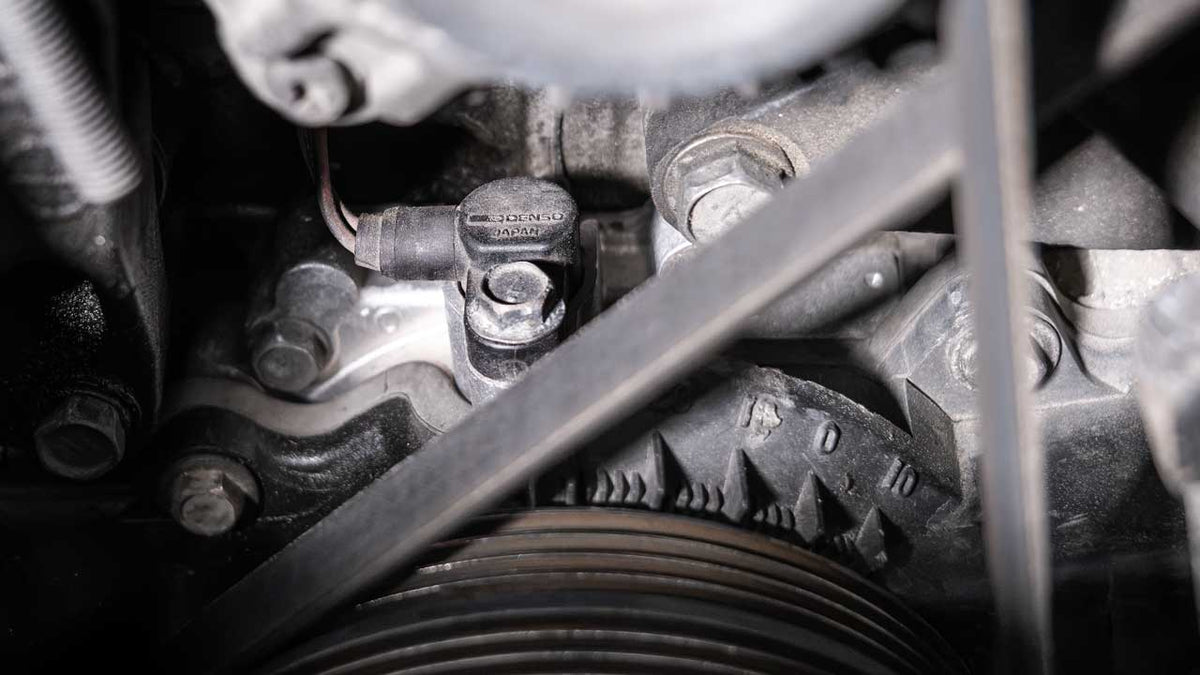
Inputs are how the ECU 'sees' what the engine is doing
Outputs: Making Things Happen
Outputs are how the ECU controls engine and its components. The most critical outputs are fuel injection and ignition. The ECU precisely controls injector timing and duration to deliver the correct amount of fuel, and commands the ignition system to fire at exactly the right moment to initiate combustion.
In addition, a modern ECU manages a wide range of other functions. Boost control solenoids regulate boost pressure on turbocharged engines. Idle control valves or stepper motors are driven to maintain stable idle speed. Variable cam control adjusts valve timing based on RPM and load. Electronic throttle bodies, fuel pumps, radiator fans, and other auxiliary devices can all be wired as outputs and controlled by the ECU.
For a more in depth look at the various outputs a Link ECU has, and crucially the difference between certain output pins, check out our support website
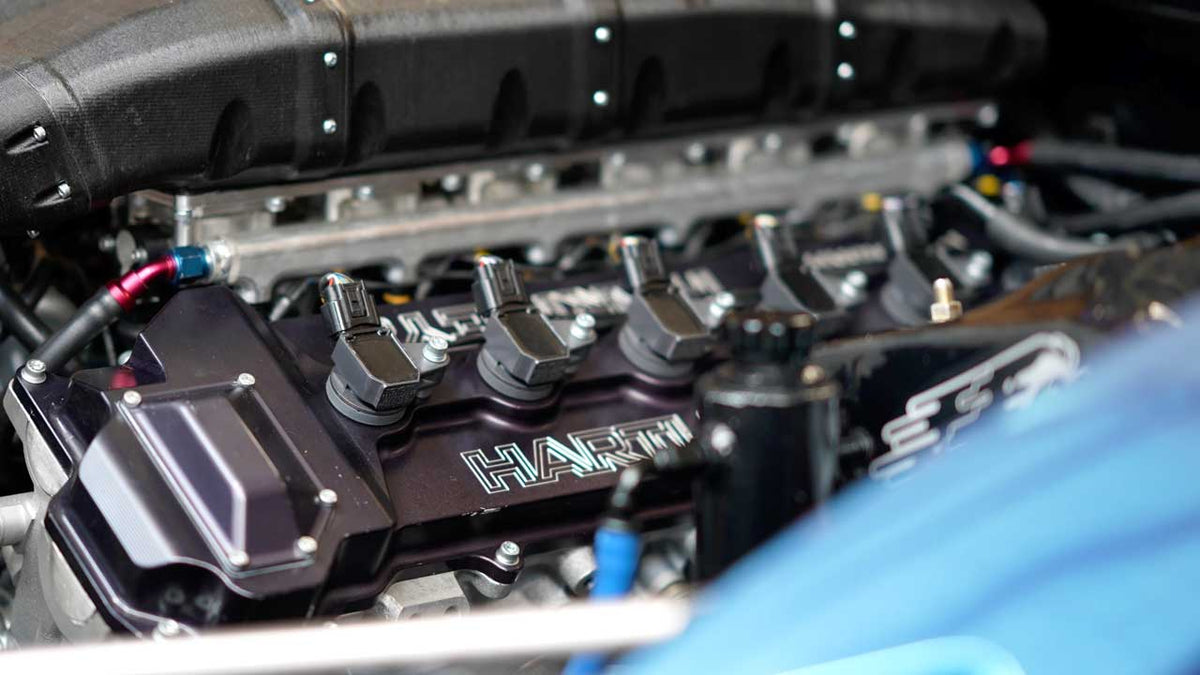
Outputs are how the ECU controls the engine and various other components
The Link ECU Ecosystem
Link Engine Management produces a full range of ECUs, both plug-in and wire-in, along with sensors, wiring accessories, and PCLink, the tuning software used to configure and tune every Link ECU.
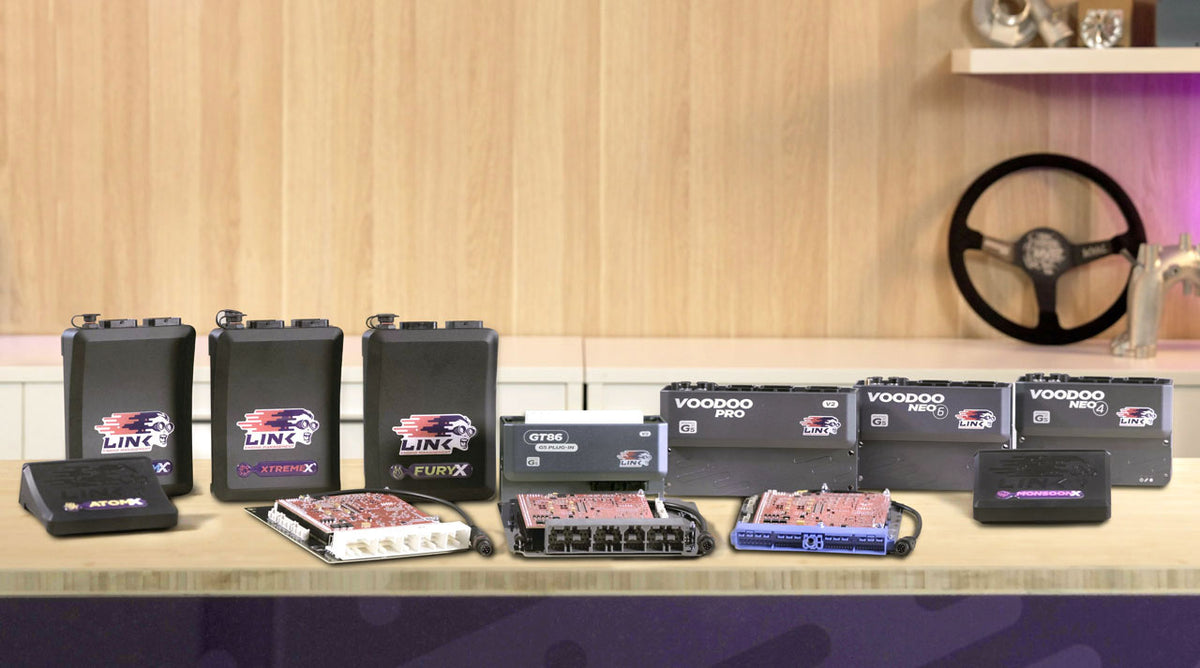
Link also produces CAN (Controller Area Network) accessories including display units and PDMs (Power Distribution Modules) that integrate directly with Link ECUs. This means you can build a fully connected system all communicating over CAN.
We also support custom calibrations and CAN, allowing you to fully tailor your project and seamlessly combine factory and aftermarket components.